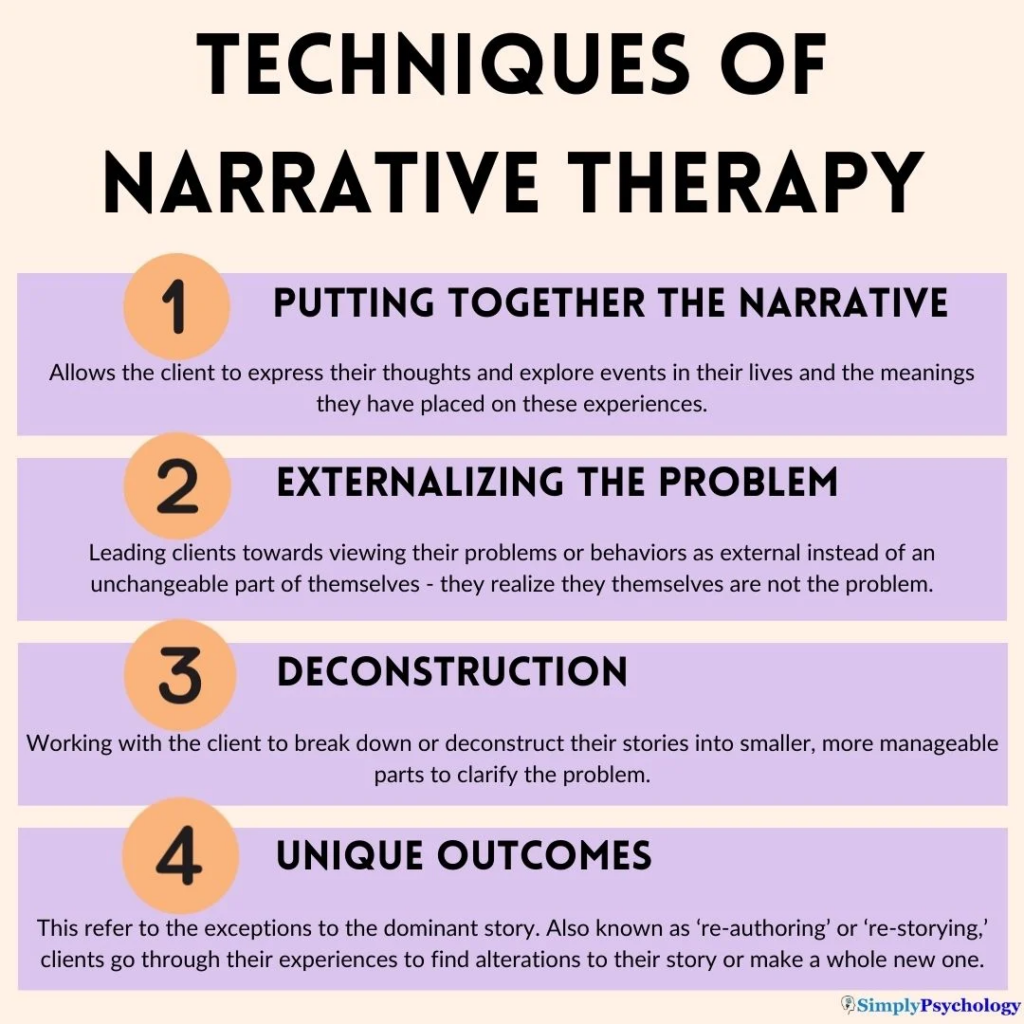
Narrative therapy is a collaborative approach to counseling that helps people separate their identity from their problems by reframing their life stories, viewing themselves as authors rather than passive victims of their issues.
Developed by Michael White and David Epston, it focuses on externalizing problems, discovering unique strengths, and “re-authoring” problem-saturated narratives into empowering, alternative stories, promoting personal growth, resilience, and agency.
Core Concepts:
- The Person is Not the Problem: Clients are encouraged to see problems as separate entities acting on them, rather than being the problem.
- Externalization: Giving the problem a name (e.g., “the anxiety monster”) to create distance and view it objectively.
- Unique Outcomes: Finding times when the problem didn’t dominate the person’s life, revealing hidden skills and strengths.
- Re-authoring: Developing new, more empowering stories that highlight competencies and preferred ways of being.
Key Techniques
- Externalizing Conversations: Asking questions that personify the problem to explore its influence.
- Unique Outcomes Questions: “When did the problem not get its way?”.
- Mapping the Influence: Exploring how the problem affects the person and how the person affects the problem.
- Therapist’s Role: A curious, non-judgmental stance, positioning the client as the expert of their own life.
Benefits & Applications:
- Reduces shame and self-blame.
- Empowers individuals to feel in control of their lives.
- Useful for various issues like anxiety, depression, PTSD, and ADHD.
- Helps build resilience and a stronger sense of self.